

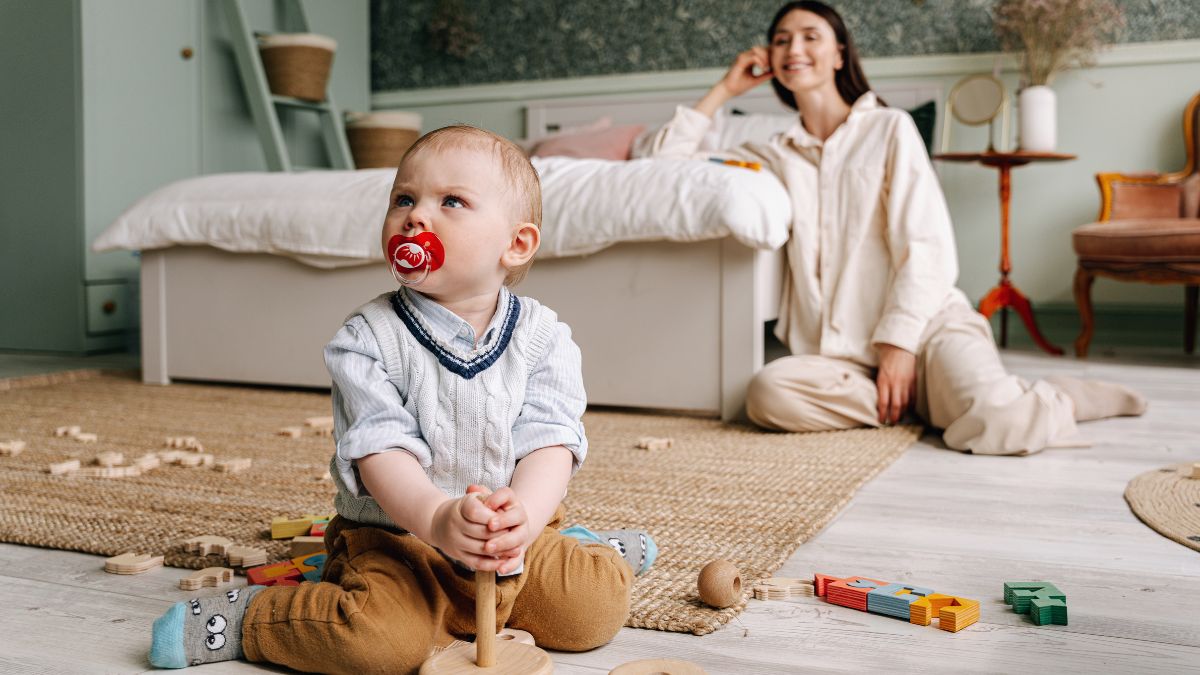
Pacifiers can be an incredibly helpful tool in early infancy. They offer comfort, help babies settle, and can make sleep routines smoother. But as children grow, many parents start to wonder whether the pacifier is still serving its purpose—or quietly disrupting sleep (with multiple “plug-ins” needed), development, or independence.
The key isn’t rushing to remove it, but understanding when pacifier use becomes an issue and how to handle the transition in a way that feels manageable for everyone involved.
Is the Pacifier Helping—or Holding Sleep Back?
In the first months of life, sucking is a natural and effective way for babies to self-soothe. Over time, however, some children begin to rely on the pacifier not only to fall asleep, but to stay asleep. When a child wakes repeatedly and needs help replacing it, the pacifier may function more like a sleep crutch than a comfort tool.
For babies around 8–10 months old, this doesn’t automatically mean the pacifier needs to go. At this stage, many are capable of learning to replace it on their own—an important step toward independent sleep.
For toddlers, the conversation often expands beyond sleep. Prolonged pacifier use may start to affect speech clarity, dental development, or emotional regulation, particularly if it extends beyond naps and bedtime.
Smart Ways to Manage Pacifier Use
Before deciding to remove the pacifier completely, it helps to know that there are several effective approaches:
- Limit use to sleep only: Avoid pacifiers for daytime soothing and instead distract them or redirect your child to a lovey you are introducing.
- Encourage independence: Place multiple pacifiers in the crib so your baby can find and replace one without help.
- Focus on bedtime habits: Putting your child down calm but awake helps reduce reliance on any external sleep aid or sleep crutch as I call it.
- Watch for readiness cues: Fewer night wakings, strong routines, and emotional flexibility often signal a smoother transition.
Often, small adjustments are enough to significantly improve sleep without fully removing the pacifier.
When It’s Time to Say Goodbye
If frequent night wakings continue, or if dental or developmental concerns arise, it may be time to consider pacifier weaning. While some families choose a firm, all-at-once approach, others find that gradual transitions are more successful—especially with older toddlers who benefit from predictability.
Rather than framing the process as taking something away, many parents see better results when the transition feels intentional and positive, giving the child a sense of participation and control.
Some parents also start wondering about bottle weaning around this stage. If that’s you, this gentle guide walks through the when, why, and how.
Read: A Gentle Guide to Bottle Weaning: When, Why, and How
A Gentle Tool Some Parents Find Helpful
For families who prefer a gradual approach, pacifier weaning systems can offer structure and clarity. These systems typically work by slowly reducing the size or effectiveness of the pacifier over several days, helping children naturally lose interest instead of experiencing an abrupt change.
One option parents often mention—and one we’ve seen work through conversations with many families—is the Frida Baby Pacifier Weaning System. It offers a step-by-step approach that can be especially helpful for toddlers who are deeply attached to their pacifier. While every child is different, having a clear plan—and the right tools—can make this milestone feel far less overwhelming.
The Bigger Picture
Pacifier transitions aren’t about perfection or rigid timelines. They’re about supporting your child’s growing independence while keeping sleep and emotional security intact.
Whether you choose to limit pacifier use, encourage self-replacement, or wean it altogether, the most important factor is consistency, calm routines, and an approach that fits your child’s developmental stage.
With the right foundation in place, saying goodbye to the pacifier doesn’t have to be stressful—it can be just another step forward.
Note: Some of the links in this article are affiliate links. This means we may earn a small commission if you decide to purchase through them—at no extra cost to you. As always, we only share recommendations we truly stand behind.