
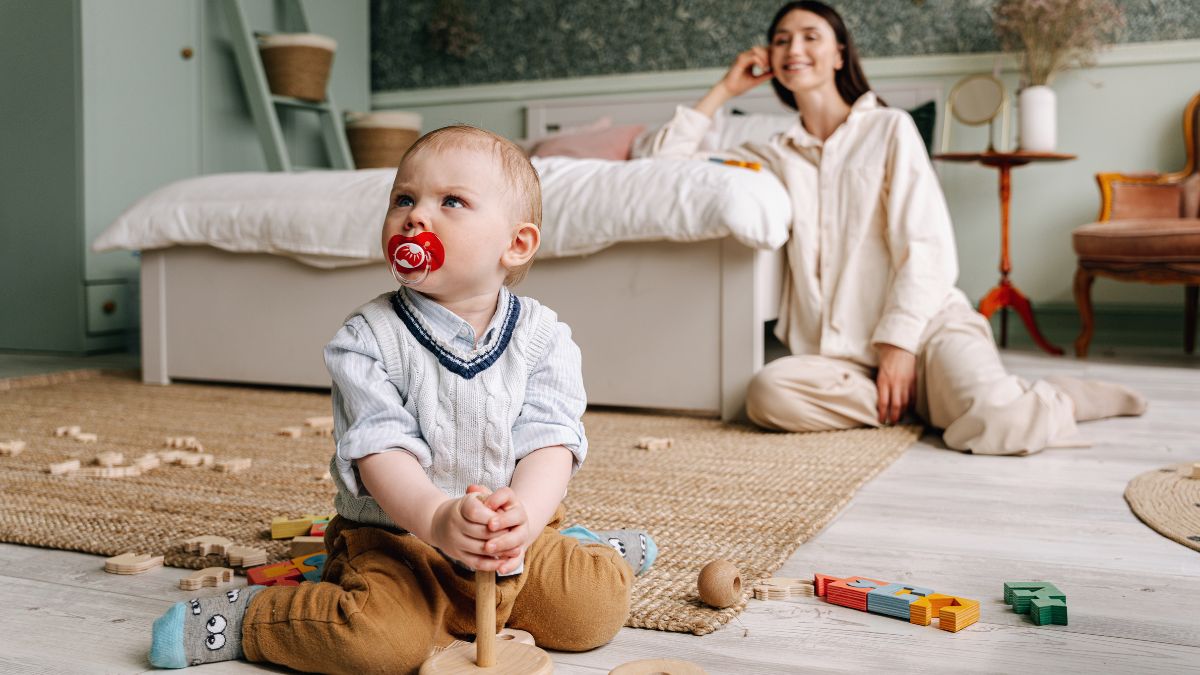
Pacifiers can be a helpful and comforting tool when our babies are young, but over time, many parents begin to wonder whether the pacifier is helping sleep — or quietly interfering with their child’s sleep. Deciding when and how to let go of the pacifier is a common milestone, so knowing your options can make this transition feel much more manageable.
Your options can be:
- Continuing to use the pacifier while limiting its use to naps and bedtime
- Limiting pacifier use to naps only (which can be harder than bedtime for a baby to calm himself) and weaning it at night
- Weaning the pacifier completely
What works best will depend on your child and your family, with the goal of making any transition feel as smooth and supportive as possible.
Keeping the Pacifier
If you decide to keep the pacifier, the goal is to gently help your baby use it on their own, instead of needing you to step in each time it falls out. Around 8-10 months old, many babies are already capable of picking up and putting a pacifier back in their mouth. If you notice that your baby has this skill already you can start by putting them into their crib at bedtime calm but awake and then put a pacifier in each hand. Thereby encouraging them to put one of the pacifiers in their mouth themselves. If they wake during the night, you can go in an put a pacifier in each of their hands again. Over the course of a few days, you can point to and direct your baby to find the pacifier in their crib themselves and stop putting it in their hand. Consider having several pacifiers in the crib and even using some glow in the dark pacifiers.
Weaning the Pacifier
Weaning the pacifier can be challenging as it often feels like all-or-nothing– its either in your mouth or it is not. This can involve a lot of crying so choosing the right moment can make a big difference. It helps to start on a night when you’re prepared for a bit of discomfort and can focus on offering calm, loving support. Good naps during the day and a relaxed, comforting bedtime routine can make the transition easier.
Get your baby to bed calm but awake and remember to offer comfort by gently stroking or soothing your child instead of reintroducing the pacifier. Use the same approach each time your child wakes during the night. Consistency matters — bringing the pacifier back after a long stretch of crying can unintentionally teach your child to hold out for it. The first few nights may be bumpy, but staying steady usually helps the adjustment happen more quickly. If you decide to wean the pacifier for naps and night sleep then dispose of all the pacifiers in the house.
Not sure which option is best? Many families begin by helping their child learn to find and replace the pacifier independently. If that works, your child can continue using the pacifier, but if frequent night wakings continue, that’s often the signal that it is time to wean the pacifier. Gulp.Making this change earlier, rather than later, is often simpler for both children and parents.
A Gradual Weaning Approach Using a Pacifier Weaning System
Until now the only option for weaniing the pacifier was cold turkey. Yes some parents have cut the pacifier tip but often tell me this ends up feeling like cold turkey any way.
Frida Baby Pacifier Weaning System may be perfect for your baby or toddler who is strongly attached to their pacifier. It works by gradually reducing the size of the pacifier over several days.
Here’s how to use it:
Day 1: Start by placing the first pacifier from the weaning set in the crib (or your child’s hand).
Days 2–4: Each night, swap the pacifier for the next smaller size.
Day 5: The smallest pacifier no longer feels satisfying, making it easier for your child to move on.
Many families like to treat this as a positive, step-by-step change, helping their child feel involved and proud along the way. Marking the final night with a small celebration or special moment can also help the transition feel encouraging and supportive.
If you have a toddler or preschooler you can also read a book with them about saying goodbye to the pacifier. Here are a few:
- No More Pacifier Duck
- Bye Bye Binky
- Little Bunny’s Pacifier Plan (in this book the bunny starts using the pacifer in fewer and fewer places until it comes to bedtime).
- The Binky Bear…you could use the Frida system and this snuggily bear!
Final Thoughts
Transitions — whether it’s moving to a toddler bed, or saying goodbye to the pacifier — don’t have to feel overwhelming. If you’ve been delaying the pacifier transition because you’re worried about disrupted sleep or big emotions, a gradual option like the Frida Baby Pacifier Weaning System can offer a gentler, more thoughtful path.
Most importantly, remember that every child is different and what works for one family may not be the right fit for another. With patience, consistency, and the tools that feel right for your family, you can guide your child through this transition in a way that feels supportive, empowering, and positive for both of you.
We may earn a small commission from affiliate links, at no additional cost to you. All recommendations reflect products we genuinely believe in.